
Build Your First AI Project This Weekend
Stop consuming tutorials. Start creating. Get the free step-by-step guide.
2026 Update:
AI agents change the leverage. One person can research, draft, and analyze at a speed that used to take a small team.
But the market still decides. Spammy AI reviews do not convert. Offers still have rules. Traffic still costs money.
This used to read like “quit your job and become an affiliate.” I’m not selling that. If you run a local shop or a solo AI business, treat CPA and affiliate offers as optional extra revenue next to the thing you already sell. Same skills. Same prompts. Less delusion.
You’ve seen the YouTube videos promising passive income from affiliate links.
Here’s what they don’t tell you: most people who try it as a “business in a box” quit. Not because the model is fake. Because they spam links, write generic reviews, and send junk traffic.
U.S. advertisers are still putting real budgets into affiliate as a performance channel (eMarketer on the 2026 affiliate channel). That does not mean you print money.
The failures happen because people approach this like it’s 2019.
The game changed. AI changed the production side. It did not change the need for an audience that trusts you.
This guide shows how I use AI to pick a niche, vet offers, ship content, and drive traffic without building a 5-person team.
Quick Navigation
| Section | What You’ll Build |
|---|---|
| Your AI Workflow | The 6-step prompt system |
| How This Makes Money | Merchant, you, customer |
| Pick Your Niche | Validation before you commit |
| Find Offers | Networks, direct, vetting |
| Content Engine | Reviews and comparisons that aren’t sludge |
| Traffic | Organic, email, paid |
| Weekly System | The calendar |
Your AI Workflow: The Real Leverage
AI agents are like junior employees with unlimited speed and zero judgment. If you don’t constrain them, they’ll confidently waste your week.
| Task | Without AI | With a tight prompt |
|---|---|---|
| Research a niche | Hours of tabs | ~20 minutes, then you verify links |
| Draft a review | Half a day | Draft in minutes, you add the proof |
| Ad variations | Designer or struggle | 20 variants, you pick 5 |
| Campaign analysis | Spreadsheet fog | Patterns in minutes |
This does not mean you press a button and money appears.
It means you test ideas faster and kill bad ones before they eat the budget.
The 6-step framework I use for every AI task
| Step | What it means | Example |
|---|---|---|
| 1. Role | Assign a specific job | “You are a conversion copywriter for home-service tools” |
| 2. Context | Background | Niche, offer rules, audience, what already worked |
| 3. Success criteria | What “good” looks like | “Headline that names the objection” |
| 4. Evidence | Force receipts | “Source URL for any claim, or omit it” |
| 5. Guardrails | Restrictions | “No medical claims. No income guarantees.” |
| 6. Review loop | You approve, market decides | Agent drafts, you edit, tests pick winners |
When you structure prompts this way, you get usable output instead of fluff.
How Affiliate and CPA Actually Pay
Affiliate / CPA = you get paid when someone takes an action through your link.
That action might be:
- Buying a product
- Submitting a form
- Calling a phone number
- Starting a trial
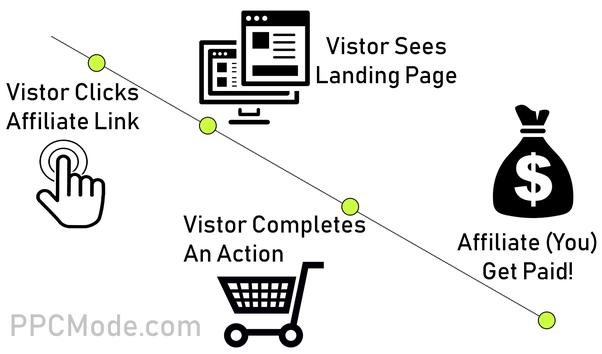
Simple concept. Execution is where people mess up.
Operator framing (this is the part I care about in 2026)
Local service: You already talk to homeowners. Recommending a financing partner, a water heater brand, or a software tool you actually use is affiliate. Ranking for “plumber in [city]” is still the main business. Do local SEO first.
Solo AI business: You already research tools. If you send clients to the stack you use (email, CRM, call tracking), those partner programs can pay. Your productized service still comes first.
Pure affiliate site: Still valid. It’s a media business. Treat it like one: niche, proof, distribution, compliance. Don’t treat it like a slot machine.
The mistake that kills most people
“Send more traffic = make more money.”
Then they blast links and convert nothing.
Quality traffic beats quantity.
If you’re promoting dog training, 100 people who searched “how to stop my dog from barking” will outconvert 10,000 random visits.
Start at the bottom of the funnel
When you’re starting out, talk to people who are ready to act, not people who are browsing.
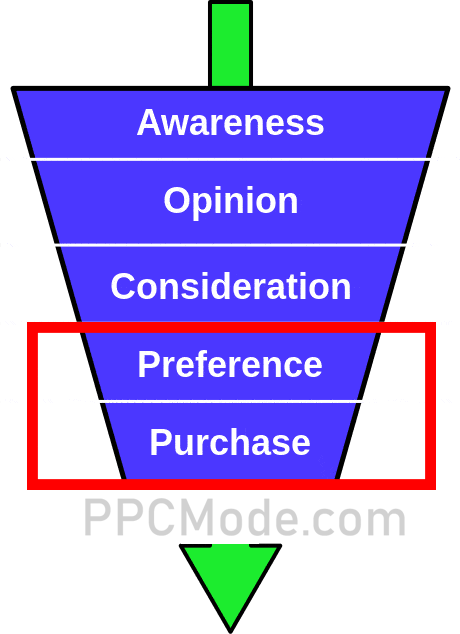
| Stage | What they’re thinking | Content | Conversion potential |
|---|---|---|---|
| Awareness | “I didn’t know this existed” | Education | Low |
| Consideration | “What are my options?” | Comparisons | Medium |
| Preference | “Which one?” | Reviews, landing pages | High |
| Purchase | “I’m ready” | Coupons, clear CTA | Highest |
Start with reviews and comparison content. Catch people when they’re choosing.
Pick Your Niche (The 20-Minute Validation)
Most people skip this. They pick a niche because it “sounds profitable” and waste months.
Step 1: Run the niche brief
I'm evaluating [NICHE] as an affiliate or CPA opportunity
next to my existing business: [DESCRIBE, or "none"].

Research and provide:
1. What specific problems do people pay money to solve?
2. What buying-intent keywords exist? (best, review, vs, near me, pricing)
3. What products or services already sell here?
4. Where does this audience spend time? (YouTube, forums, newsletters)
5. Who are the top sites in this space and what angles do they use?
6. What compliance risks exist? (health, finance, platform rules)

For each answer, include a source URL. If you cannot, say "unverified."
Critical rule: Don’t trust it blindly. If it can’t link to evidence, the information doesn’t count.
Step 2: Check the four boxes
You need “yes” to all four:
| Question | Why it matters |
|---|---|
| Can I stay interested for 2+ years? | Authority takes time |
| Are there multiple products to promote? | One product = one failure point |
| Is money already flowing here? | Passion without spend is a hobby |
| Can I add something competitors don’t have? | Your angle |
Go narrow, not wide
Instead of “pets,” try: 30-40 year old dog owners who rent and have a barking complaint from the landlord.
Now you can speak to a specific situation:
| Monetization | Offer type |
|---|---|
| Obedience courses | Digital |
| Local trainer leads | Lead gen / CPA |
| Training tools | Physical |
| Insurance, boarding | Referrals |
The narrower the niche, the better the message lands.
If this is your whole business, run the full niche research process. If this is a side line on an HVAC site, pick offers that the same homeowner already needs.
Find Offers That Convert
Most people pick offers based on payout. That’s backwards.
A $50 payout at 0.5% conversion loses to a $10 payout at 8%.
Where to find offers
Networks aggregate advertisers. Fine starting point. Watch for brokers reselling someone else’s offer at a haircut.
| Factor | Look for | Red flag |
|---|---|---|
| Reputation | History, paid on time | Non-payment complaints |
| Relationship | Direct with advertisers | Mystery hops |
| Coverage | Several offers in the vertical | One lonely offer |
| Terms | Sane minimums | Huge hold / $1000+ to cash out with no reason |
Direct programs: Google “[company] affiliate program.” Check footers for Partners. Email them if nothing is public. I’ve gotten into programs just by asking.
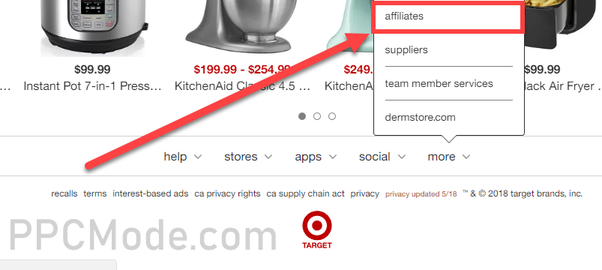
Commission ranges vary by category and change. Don’t memorize a blog table. Ask the manager and read the contract.
Vet every offer with this brief
I'm evaluating [OFFER NAME] from [NETWORK/COMPANY].

Research and tell me:
1. What traffic types are allowed? (search, social, native, email, incentivized)
2. What geos and devices convert best (only if you can source it)?
3. What are the actual conversion events?
4. What angles and claims are banned?
5. What compliance landmines exist?
6. Who else is promoting this and what are they doing?

Include source URLs. Mark guesses as guesses.
Then do the step people skip: ask the affiliate manager what is converting right now. Get it in writing.
Full process: Offer Selection
Build Your Content Engine
Here’s where most people stall. They know they need content. They can’t ship it without sounding like every other AI page.
Average content is sludge. The people who win pair authority + AI execution.
Authority means:
- You used the product or sent a real customer through it
- Screenshots and data from actual tests
- Opinions that come from use, not from a prompt
- “Here’s what happened when I tried this”
AI handles production. You provide proof.
Content types, in this order
| Content type | Intent | When to create |
|---|---|---|
| Product reviews | Highest | After you’ve used it |
| Comparison posts | High | X vs Y for the top options |
| Best-of lists | Medium-high | Best [thing] for [specific use] |
| How-to | Medium | Problems they search |
| Problem/solution | Medium | List building |
Content brief template
TARGET KEYWORD: [primary keyword]
SEARCH INTENT: [what they actually want]
OFFERS: [what you will recommend]

CONTENT FRAMEWORK:
1. Hook - their problem
2. Stakes - what happens if they ignore it
3. Credibility - why listen to you
4. Solution breakdown
5. Recommendations with links
6. Alternatives
7. FAQ
8. CTA

PROOF:
- Personal experience
- Screenshots or data
- Real examples

DISCLOSURE:
[FTC-compliant affiliate disclosure]
One pillar, multiple outputs
One solid review becomes a video script, shorts, an email, a checklist, a landing page variant, social posts.
Use AI to repurpose. You create one real pillar per week.
Full system: AI Content Workflow
Get Traffic That Actually Converts
You have two currencies: time or money.
| Type | Cash | Time | Speed | Control |
|---|---|---|---|---|
| SEO / blog | Low | High | Slow | Low |
| YouTube | Low | High | Medium | Medium |
| Email list | Low | Medium | Fast once you have it | High |
| Paid ads | High | Lower | Fast | High |
“Free” traffic still costs time
Ship useful pages. Don’t stall on logos.
AI can outline and draft. You add the part that ranks in 2026: experiments, screenshots, honest trade-offs. Search summaries steal thin posts. They don’t steal your test.
Don’t rely on SEO alone. Build email and a community you actually show up in.
Paid traffic (use a leash)
Before you buy clicks, force a Campaign Brief:
I'm planning a paid campaign for [OFFER] on [PLATFORM].

Create a brief:
1. Offer constraints (what I can/can't say)
2. Persona and triggers
3. 10 headlines
4. 10 CTAs
5. Landing page outline
6. Tracking plan
7. Test plan (one variable at a time)
Start small. $50-100 tests, not “scale.”
If the paid channel is search, use the Google Ads guide. If it’s Meta Ads, native creative plus CAPI, not 2018 interest stacks.
Traffic overview: Paid Traffic
Email is the asset
Even if you never run ads, collect emails. Put the sequence in Kit (formerly ConvertKit). Upload that list for Customer Match later.
Install retargeting pixels now so the list of “people who already care” exists when you’re ready.
Your Weekly System
Consistency beats intensity.
| Day | Focus | AI | You |
|---|---|---|---|
| Monday | Research | Topics, competitors, questions | Decide what to make |
| Tuesday | Planning | Briefs and outlines | Approve |
| Wednesday | Creation | Drafts | Proof and stories |
| Thursday | Enhancement | Format, repurpose | Final edit |
| Friday | Distribution | Schedule, email draft | Publish and reply |
| Weekend | Analysis | Compile numbers | Decide |
The point isn’t the exact days. It’s having a pipeline.
The Long Game
Your job is traffic that converts. You only get paid when someone acts. Quality is the whole game.
You can buy traffic and move faster. If you don’t own an asset (list, site, reputation), you’re easy to replace.
The progression that works:
- Use performance offers to learn what converts
- Build an audience and email list
- Sell your own thing based on what you learned
- Keep affiliate offers to fill gaps
It’s also a cheap education. Real offers, real traffic, real numbers. You don’t need a marketing degree.
In 2026, if you don’t have leverage (authority, systems, AI, a list), you’ll fight for scraps.
Your Next Step
Don’t do everything at once.
No niche yet: Niche Research with AI today.
Niche, no offers: Offer Selection, pick 3 to vet.
Offers, no content: AI Content Workflow, publish one review this week.
Content, no traffic: Pick one source for 30 days. Organic or paid. Not both until one works.
One step. This week.
Questions? Leave them in the comments. I update this based on what people actually ask.
Minimum Tool Stack
You don’t need 20 tools.
- Claude for research and drafts (force source URLs)
- Google Search Console + Analytics (free)
- Kit for email
- A click tracker when you buy traffic (tracking guide)
Add Ahrefs, Claude Code, and creative tools when the pages make money.
For a wider roundup: free AI tools for marketing.